- WHY NEXTLIFE
We don’t start by asking how to dispose of technology.
We start by asking what it can become next.
NextLife Recycling was built around a simple belief: the end of an asset’s usefulness to one
organization should not automatically be treated as the end of the asset itself.
- BRAND PHILOSOPHY
The name is the philosophy.
Technology has a lifecycle inside every organization.
It is purchased for a purpose. Deployed. Used. Refreshed. And eventually retired.
Traditional disposal thinking tends to focus on that final moment: How do we get rid of it?
NextLife looks at the same moment differently: What is the best possible outcome from here?
It is purchased for a purpose. Deployed. Used. Refreshed. And eventually retired.
Traditional disposal thinking tends to focus on that final moment: How do we get rid of it?
NextLife looks at the same moment differently: What is the best possible outcome from here?
Sometimes the answer is another user. Sometimes another market. Sometimes useful components.
Sometimes recovered value. And sometimes, when useful life has genuinely ended, the answer is
responsible recycling.
The point is not that every asset gets reused. The point is that its destination should be decided after
understanding what remains, not before.
- REUSE BEFORE RECYCLING
Reuse before reduction
Turning electronics back into raw materials is necessary when equipment has reached genuine end
of life.
But it does not have to be the first option.
But it does not have to be the first option.
NextLife prioritizes reuse where practical and has established buyer relationships in U.S. and
international markets to help create additional destinations for technology that still has utility.
Equipment that cannot continue as a complete asset may be evaluated for parts recovery before the
remaining material moves downstream for recycling.
That hierarchy sits at the center of what “NextLife” means.
Use what can still be used. Recover what can still create value. Recycle what has truly reached the
end.
- WHAT BER REALLY MEANS
- DATA SECURITY
Secure the past before creating the future.
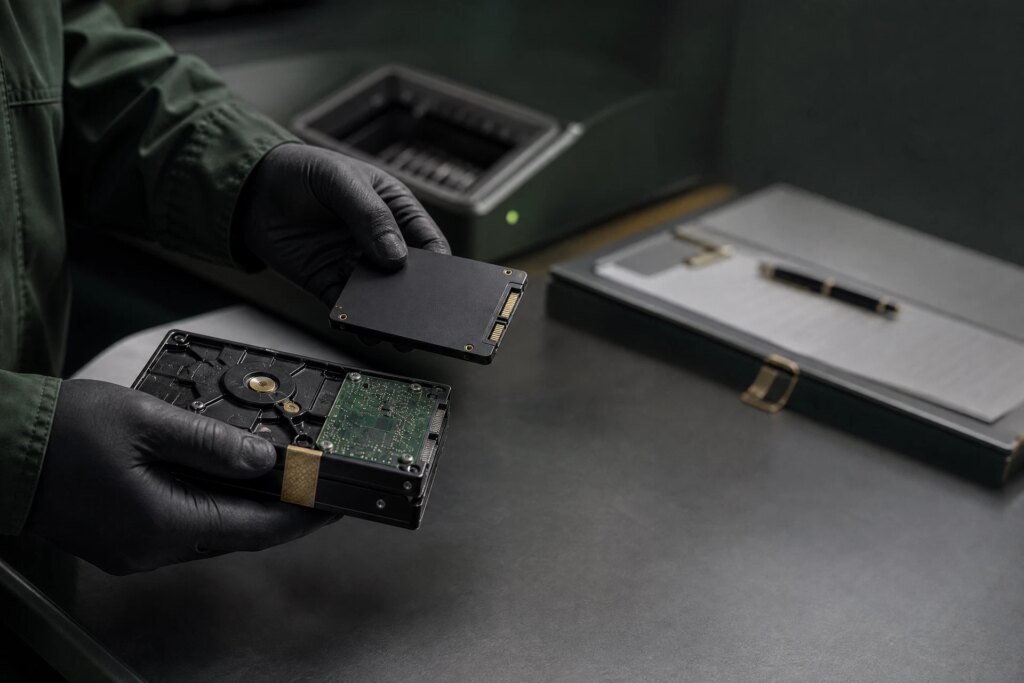
A device cannot responsibly enter another use while carrying the information from its previous one.
That is why data security is not separate from the NextLife philosophy. It enables it.
That is why data security is not separate from the NextLife philosophy. It enables it.
NextLife provides logical data clearing and physical data destruction capabilities at its facility. The
company’s data-clearing process is reviewed annually under its R2V3 program, and NextLife is both R2V3
and ISO certified.
The objective is clear
Give the hardware another opportunity without giving the previous data one
- PROOF & PERFORMANCE
Find the value others stop looking for.
Some of NextLife’s strongest results have come from assets that were difficult to remarket,
expensive for the customer to dispose of, or assumed to have very little remaining value.
$1M+
recovered from 11,000 lower-grade
laptop/tablet devices.
$2.5M+
recovered to date from a 90,000-
computer global remarketing
program.
~$10M
estimated recovered value in year
one of a high-volume smartphone
program.
A Texas school district project also moved three truckloads of accumulated equipment at no cost to
the district. Different inventories. Different challenges. Different outcomes.
The common thread is that NextLife looked beyond the most obvious disposition route.
- RESPONSIBLE END-OF-LIFE PROCESSING
Responsibility does not end when value does.
Eventually, some technology reaches its final useful stage
Eventually, some technology reaches its final useful stage.
When equipment no longer has a practical path to reuse, remarketing, or component recovery,
NextLife works with downstream partners for environmentally responsible processing.
That final stage is not a failure of the NextLife philosophy. It completes it.
Because finding the best next life also means recognizing when responsible material recovery is the
right one.
- FLEXIBLE ENGAGEMENT
No preset ending.
NextLife works with technology in different quantities, conditions, and environments. The company
does not impose a public minimum asset count, and logistics can be developed case by case based
on the customer’s location, equipment, and project circumstances.
That flexibility reflects how the company approaches the assets themselves.
Do not decide what something needs before you understand what it is.
The next life of technology starts with a better first question.
Not: How quickly can we get rid of this?
But: What is the smartest thing we can do with it now?
That is the question NextLife was built to answer.
But: What is the smartest thing we can do with it now?
That is the question NextLife was built to answer.