- ENTERPRISE & CORPORATE IT
Technology retirement deserves the same control as technology deployment.
You plan how assets enter the organization. NextLife helps you bring the same discipline to how they
leave it—with secure processing, coordinated logistics, asset accountability, and a strategy for
recovering value where it remains.
- THE REFRESH CHALLENGE
- THE REFRESH CHALLENGE
A refresh is not complete when the new equipment arrives.
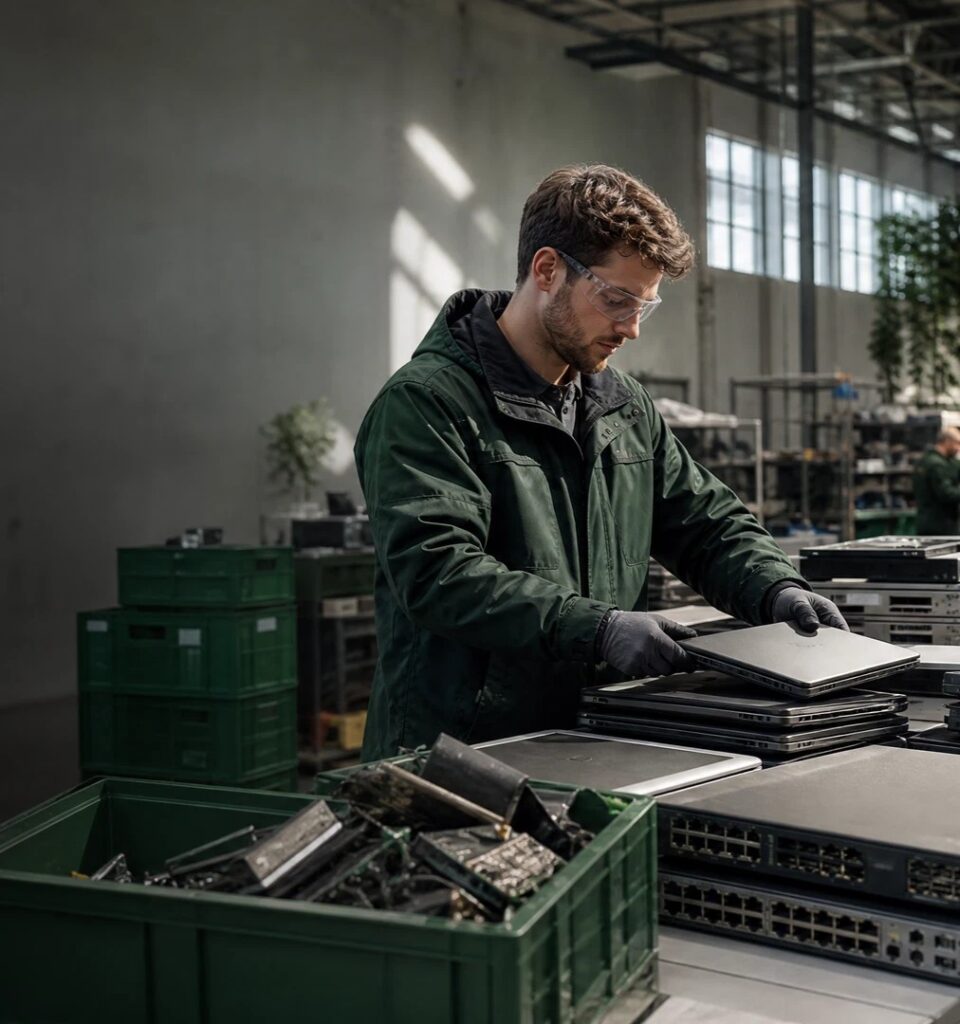
For IT teams, replacing technology is usually the easy-to-see part of the project. The harder questions sit behind it.
What happens to the previous devices? Where are they located? Which contain sensitive
information? Which still have market value? Which should be remarketed, and which have genuinely
reached end of life? And who owns the process once the assets leave company premises?
Without a clear disposition plan, yesterday’s infrastructure becomes tomorrow’s storage problem, security concern, or missed recovery opportunity.
NextLife helps close that gap.
- MULTI-SITE LOGISTICS
From scattered assets to one coordinated process.
Enterprise inventories do not always sit neatly in one room.
Equipment may be distributed across offices, facilities, remote locations, or multiple operating sites.
Some assets may be documented precisely. Others may require an inventory review or even an initial
assessment from photographs before logistics can be planned.
NextLife coordinates collection and processing based on the project rather than forcing every
customer into a fixed logistics model.
That flexibility matters when disposition has to fit around an operating business instead of the other way around.
- MULTI-SITE LOGISTICS
- DATA SECURITY
Control should continue after the equipment leaves your hands.
For corporate IT and information security teams, retired hardware is still part of the organization’s
risk surface until the information on it has been addressed.
NextLife provides logical data clearing and physical data destruction capabilities within its facility,
with its data-clearing processes reviewed annually as part of its R2V3 program. The company is R2V3
certified and ISO certified.
The objective is not merely to remove devices from a location. It is to create confidence about what happened after they left.
- OIL COMPANY CASE STUDY
Security was the barrier. A better process became the solution.
An enterprise oil company had more than 1,000 devices spread across multiple locations in West
Texas.
The client was initially reluctant to release the hard drives, making chain of custody central to the
engagement.
NextLife developed a logistics solution using lockable transport carriers, tracked the equipment
through detailed audit reporting, and issued Certificates of Data Destruction. Over a relationship
spanning several years and recurring quarterly pickups, the program has recovered more than
$100,000 for the customer.
That engagement did more than move equipment. It removed the concern that had prevented the equipment from moving in the first place.
- OIL COMPANY CASE STUDY
- ENTERPRISE-SCALE REMARKETING
At enterprise scale, the market matters as much as the inventory.
Large organizations can retire assets in volumes that make conventional resale difficult.
NEXTLIFE RECYCLING | PAGE 08 – ENTERPRISE & CORPORATE IT
Client Review Draft | 27
The problem becomes even more complex when equipment is distributed across countries or
regions.
For one Technology-as-a-Service company, NextLife was tasked with remarketing approximately
90,000 computers across 66 countries. Some units required resale within the country where they
were located, while others moved through regional processing hubs.
The program has recovered more than $2.5 million to date. According to the client-supplied case
study, recovery exceeded the prior vendor’s paid return by 140% on a like-for-like basis. The
relationship later expanded into U.S. ITAD operations and additional international partnerships.
At that scale, disposition stops being a recycling problem. It becomes a market, logistics, security,
and asset-management problem.
- RESIDUAL MARKET VALUE
Not everything that leaves your standards has left the market.
Enterprise refresh decisions are made according to the organization’s requirements. Resale markets
work according to someone else’s.
A generation of equipment may no longer fit your security policy, performance requirements,
warranty standards, or operating environment while remaining entirely useful elsewhere.
NextLife evaluates that gap before treating usable technology as material.
Because the more intelligently assets leave the organization, the more value the organization has an
opportunity to preserve.
Make your next refresh complete.
Whether you are planning a scheduled refresh, clearing accumulated inventory, consolidating
locations, or retiring infrastructure, NextLife can help determine what should happen after the
equipment leaves service.